



So teach us to number our days, that we may apply the heart to wisdom.
Whoever claims to abide in Him must walk as 𐤉𐤄𐤅𐤔𐤅𐤏 Messiah walked. 1 John 2:6
All through the Messianic Writings about the life of Messiah—from Matthew to John—we see that there are major events taking place in the life of Messiah 𐤉𐤄𐤅𐤔𐤅𐤏, occurring at important milestones: His birth during the Feast of Tabernacles—not December 25th—His many healing miracles on Sabbath—the seventh day of the week and not Sunday—His death on Passover day—Wednesday and not Friday—His rest in the tomb for 3 days and 3 nights, from the annual sabbathon of the Feast of Unleavened Bread to the seventh day Sabbath, and the resurrection near the end of the Sabbath—not on Sunday, or the first day of the week—and finally the giving of the Set Apart Spirit (as told in the book of Acts) on Shabuot (which some call Pentecost).
It follows quite obviously that Messiah’s return will be timed to occur around the next appointed time in the sequence: Yom Teruah or Feast of Trumpets.
The Scripture unlocks the true meaning of the appointed times of 𐤉𐤄𐤅𐤄, dedicated times of celebration and reflection which are set out in the Words which 𐤉𐤄𐤅𐤄 gave to Moshe on Mount Sinai for all the seed of Abraham—the people of the eternal covenant—to observe.
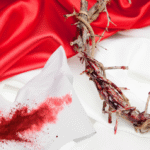
The first of these annual celebrations is Pěsaḥ (פֶּסַח or Passover). This has both historical and prophetic significance. The historical significance is widely accepted and straightforward. Passover is well known to mark the night when the children of YAH were delivered out of bondage from Egypt and spared from the plague of death because they obeyed the command to place the blood of the passover lamb on their doorposts. However, the less known spiritual and prophetic importance is far more profound. The deliverance from Egypt and protection from the plague of death foreshadows the spiritual deliverance from sin and protection from the second death in the lake of fire and brimstone. The removal of items with leaven or leavening agents is symbolic of putting away sin from our lives, as we need this restoration to be able to stand in the presence of the Most High YAH!
We read in 1 Corinthians 5:7:
Get rid of the old leaven, that you may be a new unleavened batch, as you really are. For Messiah, our Passover, has been sacrificed for us.
The True Passover is extolled in the Book of Revelation (Ḥazon) for being the only one worthy to remove the seals and open the scroll in the Father’s hand, and the ultimate purpose of His sacrifice is also made clear in Ḥazon (Revelation) 5:9-10:
And they sang a new song: ‘Worthy are You to take the scroll and open its seals, because You were slain, and by Your blood You purchased for Alahym those from every tribe and tongue and people and nation. You have made them to be a kingdom and priests to serve our Alahym, and they will reign upon the earth.”
So in these two passages, the plan of deliverance is clearly revealed, and each of the appointed times (moadiim) set out in Wayyiqra (Leviticus) 23 marks a milestone on this journey which the Father calls us to walk with Him.
We’ll let the Scripture speak for itself:
Pěsaḥ (Passover)
In a loud voice they were saying: “Worthy is the Lamb, who was slain, to receive power and riches and wisdom and strength and honor and esteem and blessing!” (Rev 5:12)
Chag Matzah (Feast of Unleavened Bread)
While they were eating, 𐤉𐤄𐤅𐤔𐤅𐤏 took bread, spoke a blessing and broke it, and gave it to the disciples, saying, “Take and eat; this is My body.” Then He took the cup, gave thanks, and gave it to them, saying, “Drink from it, all of you. This is My blood of the covenant, which is poured out for many for the forgiveness of sins. (Mat 26:26-28)
HaBikurrim (Firstfruits)
But Messiah has indeed been raised from the dead, the firstfruits of those who have fallen asleep. For since death came through a man, the resurrection of the dead comes also through a man. For as in Adam all die, so in Messiah all will be made alive. But each in his own turn: Messiah the firstfruits; then at His coming, those who belong to Him. (1 Corinthians 15:20-23)
Shabuot (Feast of Weeks or Pentecost)
When the day of Shabuot came, they were all together in one place. Suddenly a sound like a mighty rushing wind came from heaven and filled the whole house where they were sitting. They saw tongues like flames of fire that separated and came to rest on each of them. And they were all filled with the Set Apart Spirit and began to speak in other tongues as the Spirit enabled them. (Acts 2:1-4)
Yom Teruah (Feast of Trumpets)
Listen, I tell you a mystery: We will not all sleep, but we will all be changed— in an instant, in the twinkling of an eye, at the last trumpet. For the trumpet will sound, the dead will be raised imperishable, and we will be changed. For the perishable must be clothed with the imperishable, and the mortal with immortality. When the perishable has been clothed with the imperishable and the mortal with immortality, then the saying that is written will come to pass: “Death has been swallowed up in victory.” “Where, O Death, is your victory? Where, O She’ol, is your sting?” (1 Corinthians 15:51-55)
Yom Kippur (Day of Atonement)
Alahym presented Him as the atoning sacrifice through faith in His blood, in order to demonstrate His righteousness, because in His forbearance He had passed over the sins committed beforehand. (Rom 3:25)
For if, when we were enemies, we were reconciled to Alahym by the death of His Son, much more, being reconciled, we shall be saved by His life. And not only so, but we also joy in Alahym through our Master 𐤉𐤄𐤅𐤔𐤅𐤏 Messiah, by whom we have now received the atonement. (Romans 5:10-11)
For this reason He had to be made like His brothers in every way, so that He might become a merciful and faithful High Priest in service to Alahym, in order to make atonement for the sins of the people. (Heb 2:17)
Sukkot (Feast of Tabernacles)
And I heard a loud voice from the throne saying: “Behold, the dwelling place of Alahym is with man, and He will dwell with them. They will be His people, and Alahym Himself will be with them as their Alahym. ‘He will wipe away every tear from their eyes,’ and there will be no more death or mourning or crying or pain, for the former things have passed away.” (Rev 21:3-4)
Yom Shemini Atzeret (Last Great Day)
And the One seated on the throne said, “Behold, I make all things new.” Then He said, “Write this down, for these words are faithful and true.” And He told me, “It is done! I am the Aleph and the Tau, the Beginning and the End. To the thirsty I will give freely from the spring of the water of life. The one who overcomes will inherit all things, and I will be his Alahym, and he will be My son.” (Rev 21:5-7)
These observances are scheduled according the Scriptural Calendar, and they are observed between the first and seventh Scriptural month, as follows:
- Pěsaḥ – the 14th day of the month of Abib (the first Scriptural month) | Lev 23:5
- Chag Matzah – the 15th to the 21st day of Abib (this is the only month which the Father called by Name) | Lev 23:6-8
- HaBikurrim – the morning after the Sabbath during the week of Chag Matzah, always occurs after the weekly Sabbath during that week | Lev 23:9-14
- Shabuot – 50 days after the Sabbath during Chag Matzah, the count starting on HaBikurrim. Seven Sabbaths are counted, and Shabuot is on the day after the seventh weekly Sabbath or day 50. | Lev 23:15-22
- Yom Teruah – the 1st day of the seventh month | Lev 23:23-25
- Yom Kippur – from the 9th evening to the 10th evening, starting when the day transitions from day to night | Lev 23:26-31
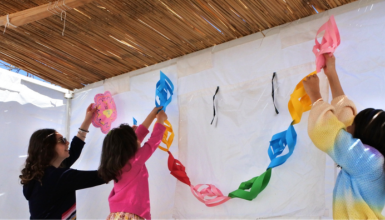
- Sukkot – the 15th to the 21st day of the seventh month | Lev 23:33-43
- Yom Shemini Atzeret – the 22nd day of the seventh month (also called “the eighth day,” foreshadowing the renewed kingdom) | Lev 23:39
Here are some sources we use to inform our understanding of YAH’s prophetic calendar and the appointed times.
We also recently bought Appointed Times – Walk In The Light #10 (E-Book) as a reference book to learn more about YAH’s moadiim (appointed times).
We urge you to weigh everything against the Scripture, which is the final authority on YAH’s calendar. We do differ on some points with some sources, since we find that some of the things they apply do not align completely with the Law of YAH as given to Moshe. One example is the observance of Shabuot, which (according to Scripture) always occurs the day after the weekly Sabbath. It never has a fixed date in Scripture, since YAH instructs us to actually count 50 days each year to know when Shabuot is to be observed. We urge you to also ensure that Scripture is the final authority on all things pertaining to worship and set-apart living.
We leave you with these kind words of caution against futile debates and encourage you to stay away from verbal battles with people who are not seeking to understand and live by truth.
“One person regards a certain day above the others, while someone else considers every day alike. Each one should be fully convinced in his own mind.” (Rom 14:5)
But reject foolish and ignorant speculation, for you know that it breeds quarreling. And a servant of the Master must not be quarrelsome, but must be kind to everyone, able to teach, and forbearing. He must gently reprove those who oppose him, in the hope that Alahym may grant them repentance leading to a knowledge of the truth. Then they will come to their senses and escape the snare of the devil, who has taken them captive to his will. (2 Timothy 2:23-26)
🕊 Shalum!
We’ve been redeemed by the Blood of the Lamb, to restore us to our Loving Father, with whom the Redeemed will dwell in shalum forever and ever!